
 Creative hobbies tap into our innate capacity for self-expression and creativity. Allowing us to externalize internal experiences and transform abstract ideas into tangible forms. These pursuits connect us to the uniquely human drive to make meaning through creation—to leave our mark, however modest, on the world around us. Through creative activities, we develop our aesthetic sensibilities, cultivate patience and attention to detail, and often experience the therapeutic benefits of emotional processing through artistic expression.
The realm of creative hobbies embraces countless forms of making and doing. Traditional arts like painting, drawing, or sculpture offer visual means of expression, while writing poetry, fiction, or personal essays provides verbal outlets for thoughts and feelings. Musical pursuits—whether playing instruments, singing, or composing—engage our relationship with sound and harmony. Crafts such as woodworking, knitting, pottery, or jewelry-making allow us to create functional objects imbued with personal significance and beauty. Culinary creativity through cooking, baking, or brewing transforms necessity into pleasure while engaging all our senses.
What distinguishes creative hobbies is their inherent subjectivity and personal nature. Unlike activities with clear metrics for success or standardized rules, creative pursuits invite individual interpretation and expression. In baseball for example, you win by scoring the most runs. How you run around the bases, isn’t really significant. You could skip around the bases and it wouldn’t change the outcome. Creative activities remind us that human experience cannot be fully quantified or standardized—that our unique perspectives and aesthetic preferences have inherent value. In a world increasingly dominated by algorithms and optimization, creative hobbies preserve spaces for the idiosyncratic, the intuitive, and the ineffable.
Creative Hobbies
- Art: Painting, drawing, sculpture, digital art
- Crafts: Knitting, woodworking, pottery, jewelry making
- Writing: Journaling, poetry, fiction writing, blogging
- Music: Learning an instrument, composing, singing
“But I’m not an artist!” you say. I didn’t ask you to be an artist. I asked you to find a creative hobby. It could be an art like painting or pottery but it could just as easily be knitting or writing or singing.
A creative hobby can be a source of personal fulfillment. Especially as you progress. The items created are a record of you progression towards mastery. I love comparing the pottery I make now to the stuff I made when I started. The new stuff is so much lighter and more interesting. It shows my progression as a potter.
It also helps boost confidence. Learning new skills allows you to feel more capable. Many of the skills you learn in a fun hobby setting can be transferred to real life uses. This further enriches your life and improves your overall well-being.
My primary creative hobby is pottery. Pottery is an incredible due to the many moving parts. First is the making or throwing of pots. This process takes a lifetime to master. One can always find new challenges in the creation process, whether it is a new shape, new technique or a new clay. And you don’t need a wheel to get started.
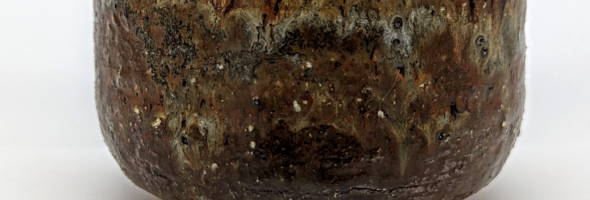
I make chawan which translates to “tea bowl”. They’re the tea bowls you see used in the Japanese tea ceremony. What I love about these bowls is that you don’t need a pottery wheel to make one, all you need is some clay. And the process can take days. It is a slow, thoughtful process of shaping the clay into a shape that is pleasing to the eye, and the mouth. Because someone is going to drink macha out of it. There is a number of things the artist needs to consider when making a teabowl and you could easily spend a lifetime devoted it.
New shapes challenge because the skills required are slightly different. For example, if you are throwing a bowl, which is usually the first thing people learn to make, you learn to pull up the sides of the bowl. When you progress, you can pull them higher. Now you can make a new shape, a cup. But if you want to make a mug, with a handle you have to learn a new technique, pulling handles. Once you have mastered that, you might try the same thing in a new clay – porcelain, which is much harder.
Glazing fired pots is akin to chemistry and painting. Some glazing can be simple, a few ingredients; while others can be entire recipes like baking. Applying the glaze can be as simple as dipping the pot in a bucket, while other processes take months of detailed work. It all depends on the desired outcome.
And then the firing process is steeped in physics and thermodynamics with temperature and atmosphere playing crucial roles in the desired outcome. You can have something in mind when you begin but, in the end, it is up to the fire. All of these different activities keep it interesting.
Pottery is also a meditative process. Each step takes its allotted time. Rushing is not advisable. It produces bad pots. As I get better at pottery, I am better able to judge other people’s work. I can see what looks impressive, and what is actually impressive.
I also paint. A lot. Painting has been with me a lot longer than pottery. I first learned to paint in watercolors, then acrylics and oils. With a BFA from the University of Victoria in painting, that’s not too surprising that I paint so much. I have been fortunate enough to work at Opus Art supplies in BC and Tern Art Supplies in Toronto. That is where I met Kathryn Bemrose. She is one of the few artists I know who make a living off of their art. Personally I think she is one of the best abstract painters in Canada and a huge influence on my painting.
More recently I started working in fusion glass. A medium I knew nothing about. This is glass that is worked in a kiln instead of blown or pieced together like stained glass. I was fortunate to meet Layne Verbeek, another professional artist who has a glass studio here in Toronto. To date I have made several objects such as bowls and tealights. Like pottery there are many moving pieces to the artform and you could spend your whole life doing it and still not know everything.
I also write, obviously. You’re reading my blog. I have published a few articles over the years. First in Student Traveler and then in Bike Magazine. I like writing and editing. It is therapeutic and studies have shown that it is good for your mental health.
I understand that I will never be a professional artist. While I love painting and printmaking, pottery, glass fusing, all sorts of creative activities, I am not skilled enough at any of these to become a professional artist. And that’s okay. I don’t make art to make money. I make art because it makes me happy.
Enhances Creativity and Problem-Solving Skills
Hobbies that require creativity and critical thinking, can translate into improved problem-solving skills in other areas of life. Hobbies like writing, crafting, or composing stimulate the brain and encourage innovative thinking. I have met a number of prop makers for movies over the years and their entire job is problem solving. For example, one prop maker needed to make a book for a movie, but needed it to look very old and worn. We talked about different papers, feeling each sample. Discussed ways to stain it and the best way to dog-ear the pages. We talked about binding and where to find suitable leather-life material for the cover. It was a fascinating exercise.
Not everyone will have these sorts of creative challenges at work, but every job has some problem solving to it. Having a creative hobby strengthens and expands those “muscles”. When the Harvard Business Review is suggesting you should spend more time on hobbies, you know you’re onto something. However, they put it in terms of being able to stand out at work and I think that is the wrong incentive. They put it into capitalist terms again.
Creative hobbies are more than just pastimes—they are pathways to self-expression, confidence, and personal growth. Whether it’s shaping clay into a simple chawan, sketching your thoughts on paper, strumming a few chords, or knitting a scarf, these activities give us space to slow down, create with intention, and find joy in the process. In a world that often measures success in speed and efficiency, creative pursuits remind us of the beauty in patience and individuality. So, embrace the paintbrush, the pen, the instrument, or the lump of clay. Find your creative hobby, and let it transform not only what you make but how you feel about yourself and the world around you.
Life isn’t just about working and consuming—it’s about creating. A creative hobby, whether painting, pottery, writing, or music, can boost your confidence, calm your mind, and add meaning to your days. Don’t wait to be an “artist.” Start small, start today, and let creativity shape a happier, more fulfilled you.